
Our Farm

Concinnitas Farm is more than a vineyard. It is a deliberately composed fermentation landscape—one of the most diverse of its kind in the Willamette Valley.
The vineyard, orchard, hops and native landscape exist in relationship to one another. Together, they reflect our belief that diversity—when thoughtfully composed—fosters a healthier, more resilient farm, more expressive fermentations, and a richer experience at the table.
Our Vineyard

Every aspect of the vineyard was intentionally planned—from varietal and clonal selection to block placement, row orientation, spacing, and training methods. Rather than impose a preconceived model, we designed the vineyard in direct response to the land itself.
Much of the vineyard occupies a hillside shaped like an ancient Roman amphitheater. Its undulating slopes and varied aspects create meaningful differences not only between blocks, but within them—differences that translate into greater nuance and complexity in the wines.
The vineyard is rooted in Bellpine soils formed more than 12 million years ago from ancient seabeds. These compact, well-draining, nutrient-poor soils are challenging for young vines to establish. As roots push deeper in search of water and nutrients, however, they produce fruit of remarkable concentration and flavor.
Throughout the growing season, cool coastal winds move through the site. On certain afternoons, moisture—and even the scent of the sea—can be felt in the air. These winds temper warm summer days, enhance airflow through the canopy, and contribute to balance and vine health.
At the same time, the farm’s position within the valley and the contours of its hills make it, on average, slightly warmer than many surrounding vineyards. None of these conditions was ignored. Each informed the design of the vineyard, with the singular aim of producing the most expressive and highest-quality wines this place can give us.
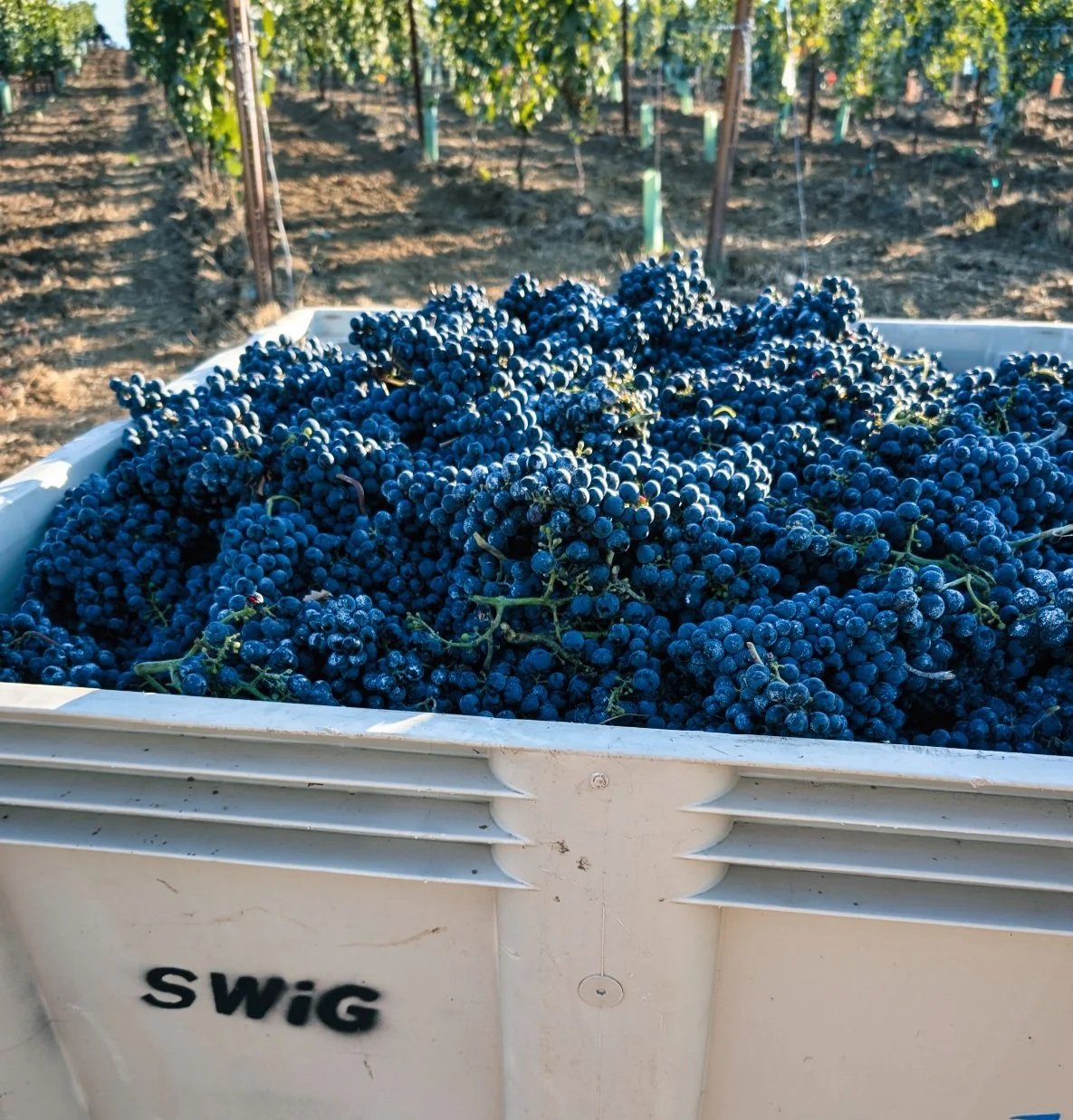
Grape Varieties & Selections
One of the defining characteristics of the Willamette Valley is its diversity. Vineyards are prevalent, but they do not dominate the landscape. Forests, orchards, farmland, and open space coexist, and an extraordinary range of crops can flourish here.
We approached grape selection with the same openness. Rather than begin with an assumed variety, we considered the farm’s soils, exposures, airflow, growing season, and long-term climatic future. We then selected varieties and clones for the particular contribution each could make to the whole.
Today, more than a dozen grape varieties are planted across just over fifteen acres, including Aligoté, Albariño, Arinto, Castelão, Chardonnay, Chenin Blanc, Gamay Noir, Garnacha Tinta, Godello, Juan García, Loureiro, Mencía, Pinot Noir, Savagnin, and Trousseau Noir.
Never for the sake of being different. Always to serve this landscape more completely, in pursuit of the best wines we believe it can give us.
Farming for Quality

Our approach to farming is governed by a singular priority: quality. We believe the most direct path to that goal is organic, dry farming, and we have committed to those practices from the outset.
This commitment is not ideological. It is practical, experiential, and deeply personal. We farm with the assumption that everything grown here could one day be eaten by our own children—because experience has taught us that it almost certainly will be.
Dry farming in the farm’s depleted Bellpine soils encourages vines to push their roots deeper in search of water and nutrients. Over time, this creates more balanced vines and fruit with greater concentration, complexity, and expression.
These practices are neither easier nor more efficient. They require patience, restraint, close observation, and trust in the land. But they reward that effort with fruit—and wines—of greater depth, character, and integrity.
Our vineyard is certified organic by California Certified Organic Farmers (CCOF), although the certification formalizes a philosophy that was already embedded in the design and daily work of the farm.
Beyond the Vineyard
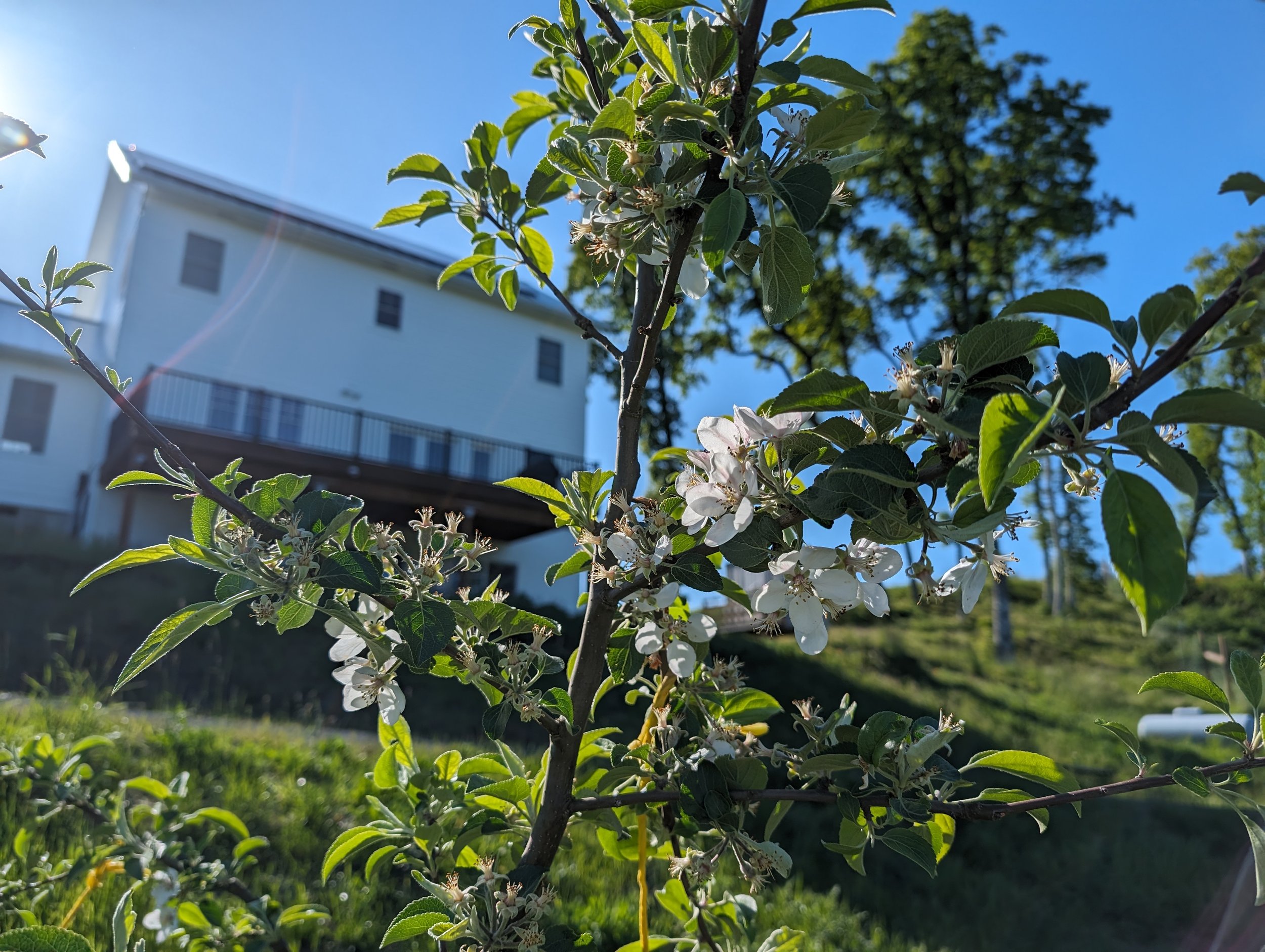
The Orchard
In recognition of the area’s agricultural history, we dedicated portions of the farm to fruit trees. We continue to restore existing plum, apple, and pear trees through annual pruning, both to preserve them and to explore their potential for the table and future fermentations.
We have also planted a cider orchard devoted to traditional Spanish apple varieties. These trees will eventually allow us to produce small quantities of estate cider shaped by the same principles of site, composition, and patience that guide our wines.
Peaches, apricots, figs, and almonds are grown for our family and to share with guests during special occasions.
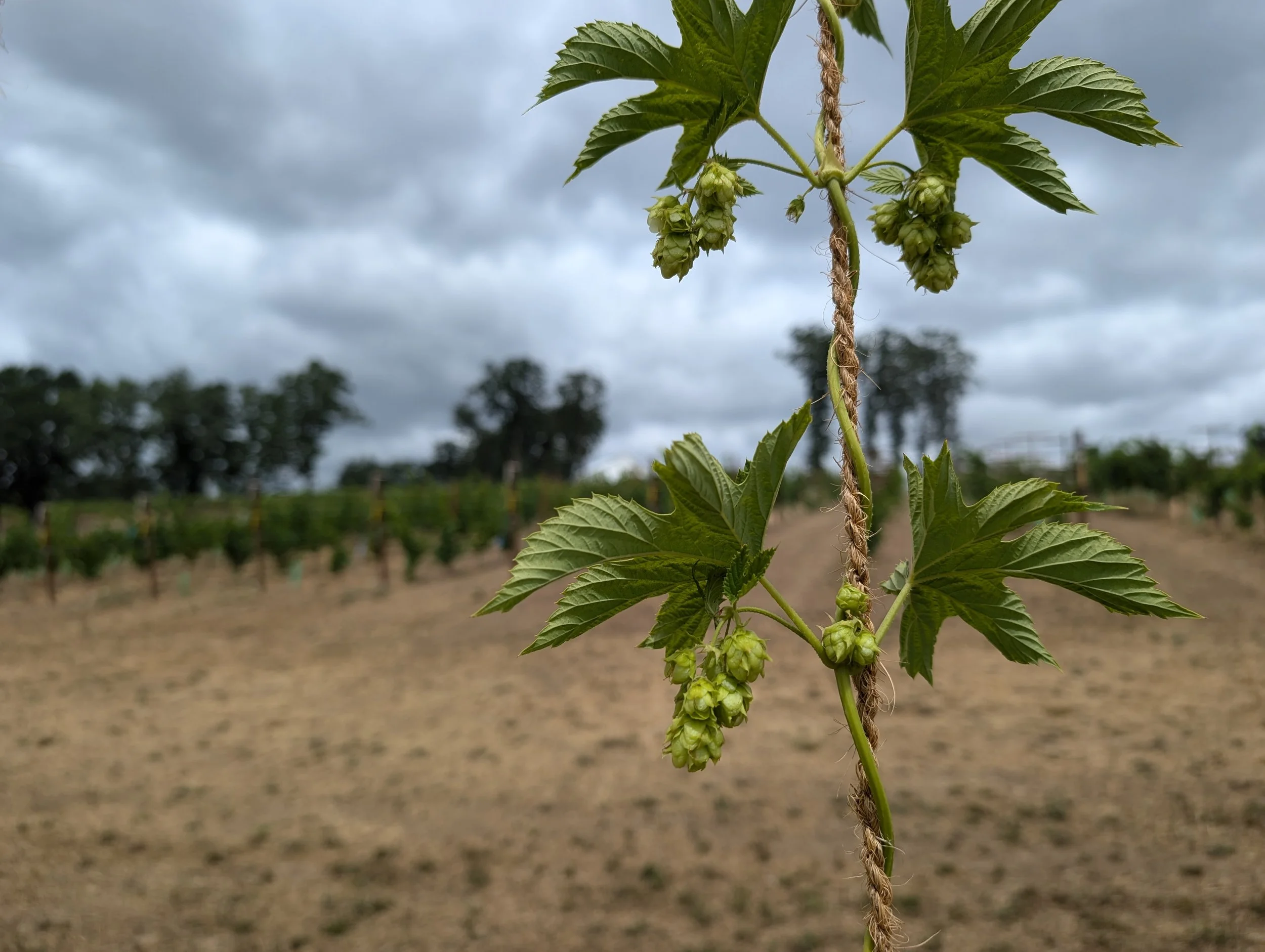
Hops & Grains
Hops were planted with the intention of eventually producing small quantities of single-farm beer—a nod to brewing traditions, family history, and the broader fermentation culture that informs our work.
We currently grow Saaz, Hallertauer, Spalt Select, Serebrianka, Fuggle, Tettnanger, and Kent Golding hops. We are also beginning to experiment with a small barley plot to assess its suitability for future use on the farm.
These projects will develop slowly. As with the vineyard, we are interested not merely in what can be grown here, but in what can become a meaningful and distinctive expression of this place.