Our Principles
At Concinnitas Farm, we meticulously planned every detail to transform our farm from a raw, undeveloped piece of land into a biodiverse fermentation farm that is perfectly suited to our site. Our goal is to provide an extraordinary and diverse flavor experience to our community by harnessing the unique features of our farm to convey its true beauty and the power and potential of the Willamette Valley. To accomplish this, we are guided by three basic principles.

Site-Specific Design
Concinnitas, first articulated as a principle of architectural beauty, holds that harmony cannot be judged in isolation—that a structure must be understood in relationship to its surroundings, both natural and human-made. At Concinnitas Farm, we have taken this idea literally. Every decision—from varietal and clonal selection to planting density, row orientation, and training method—was made in direct response to the land itself. Rather than impose a preconceived model, we embraced what was already here: the site’s ancient amphitheater-like form, its soils, its exposure, and its stately Oregon oak trees. Guided by these features, we composed a fermentation farm designed to translate this place as faithfully—and as beautifully—as possible into wine. We believe this commitment to harmony with the land results in wines of greater character, depth, and intrigue.
Biodiversity with Intent
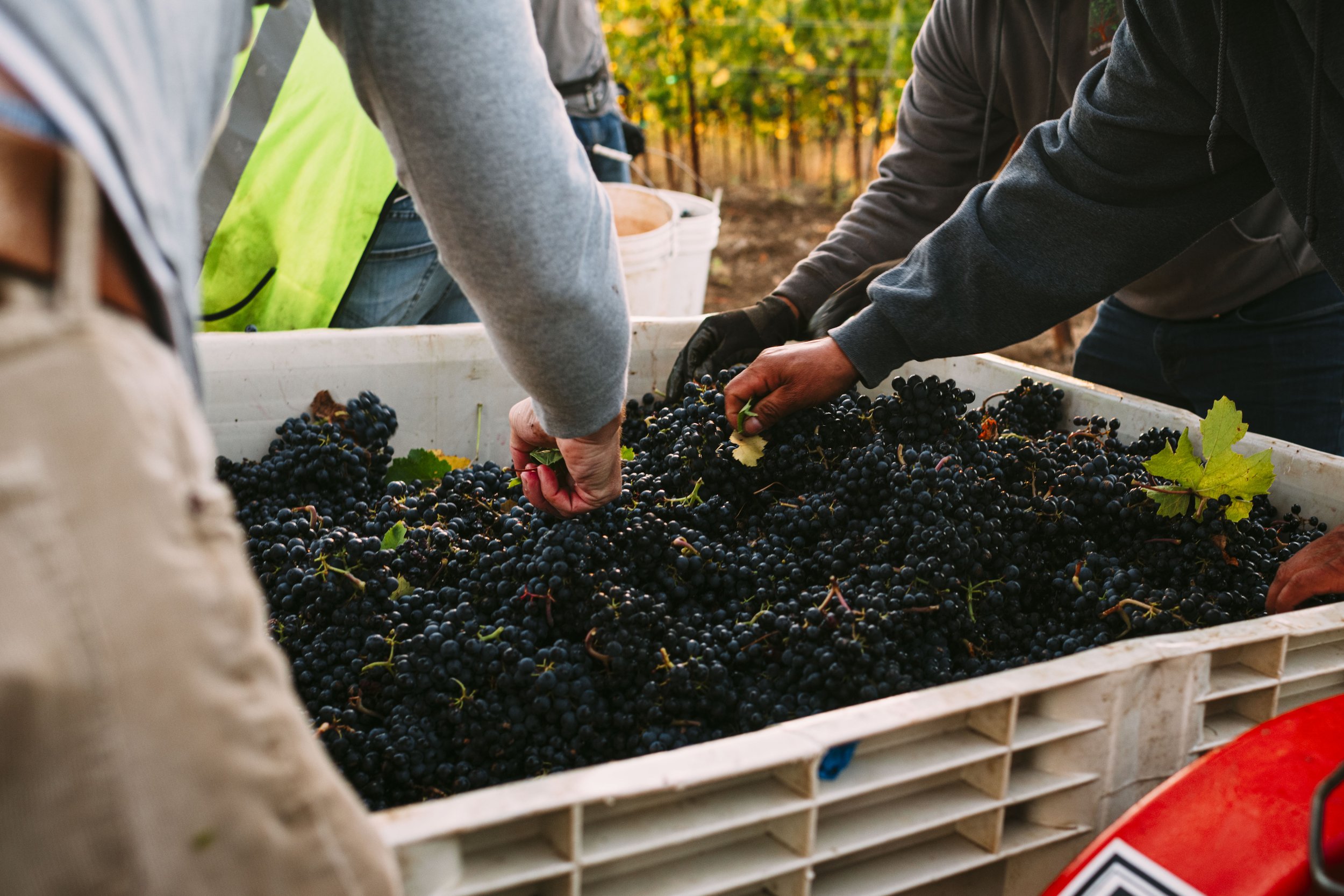
Biodiversity sits at the center of our philosophy. Concinnitas Farm is a working landscape shaped by diversity—of grape varieties, fruit trees, hops, grains, and other crops—each chosen for its role within the whole. This diversity strengthens the health and resilience of the farm, but its purpose extends beyond agronomy. It allows us to offer a richer and more compelling experience, one that better reflects the breadth, beauty, and untapped potential of the Willamette Valley. It also supports a more sustainable and humane farming community, honoring the people who steward this land each day.
Diversity, however, is never an end in itself. Every element of the farm is deliberately considered and rigorously managed, from vine planting to fermentation and bottling. Varietal and clonal choices are made not to chase novelty, but to serve a singular aim: the creation of distinctive wines of clarity, character, and the highest quality.
Quality-First Farming
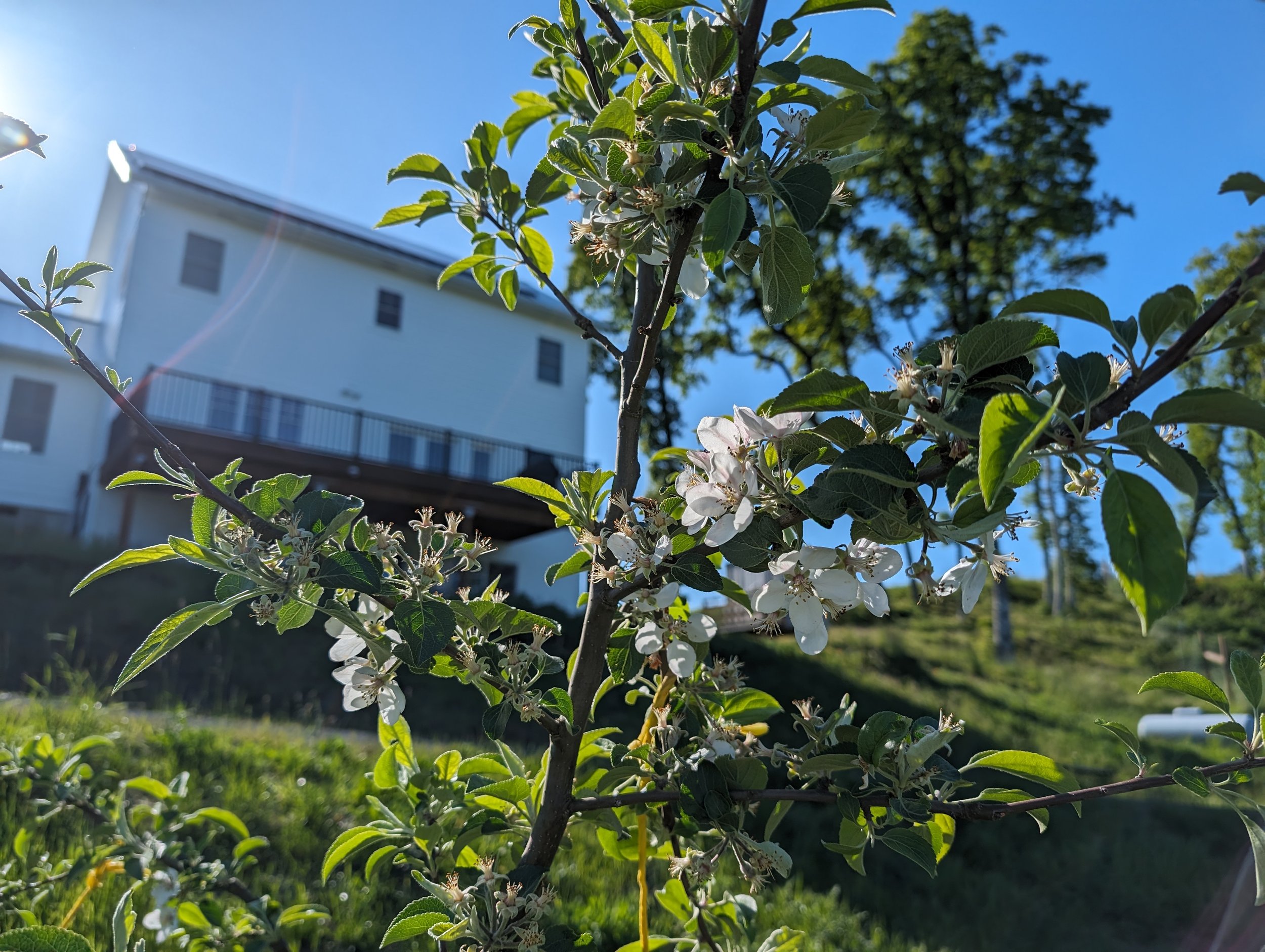
Our approach to farming is guided by a singular priority: quality. We believe the most direct path to that goal is organic, dry farming, and we have committed to those practices from the outset. This commitment is not ideological—it is practical, experiential, and deeply personal. We farm with the assumption that everything grown here could one day be eaten by our own children, because experience has taught us that it almost certainly will be.
Our vineyard is rooted in some of the oldest soils in the Willamette Valley—Bellpine, a depleted sandstone formed from ancient seabeds. Dry farming in these soils forces vines to push their roots deep in search of water and nutrients, yielding fruit of greater concentration, complexity, and expression. These practices are neither easier nor more efficient. They require patience, restraint, and trust in the land. But they reward that effort with wines of greater depth, character, and integrity.
Our farming has been certified organic by California Certified Organic Farmers (CCOF) but these designations reflect a philosophy already in practice.